
FPCI at London Climate Action Week 2026, Advancing Middle Powers Dialogue on Energy Transition
Updated: Aug 12
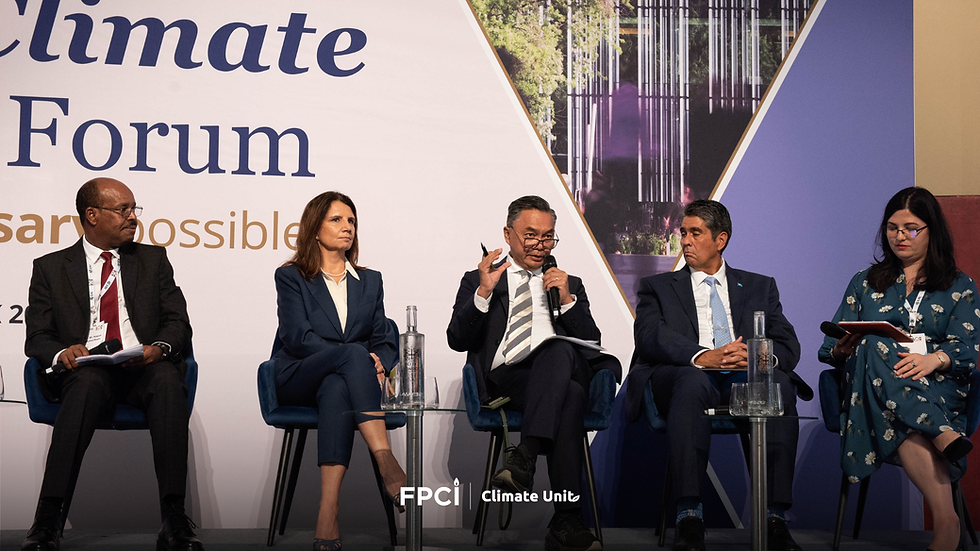
The Foreign Policy Community of Indonesia (FPCI) participated in its inaugural appearance at the London Climate Action Week (LCAW) 2026, held for the first time from 23–26 June 2026. The week-long event brought together global leaders, policymakers, business executives, and tens of thousands of civil society advocates in London to accelerate climate action at both global and local levels.
Through its engagement, FPCI was involved in discussions around geopolitics and climate action, the role of middle powers in energy transition and green industrialization, and the intersection of climate and security.
State of Climate Politics Forum: Geopolitics and Climate Action

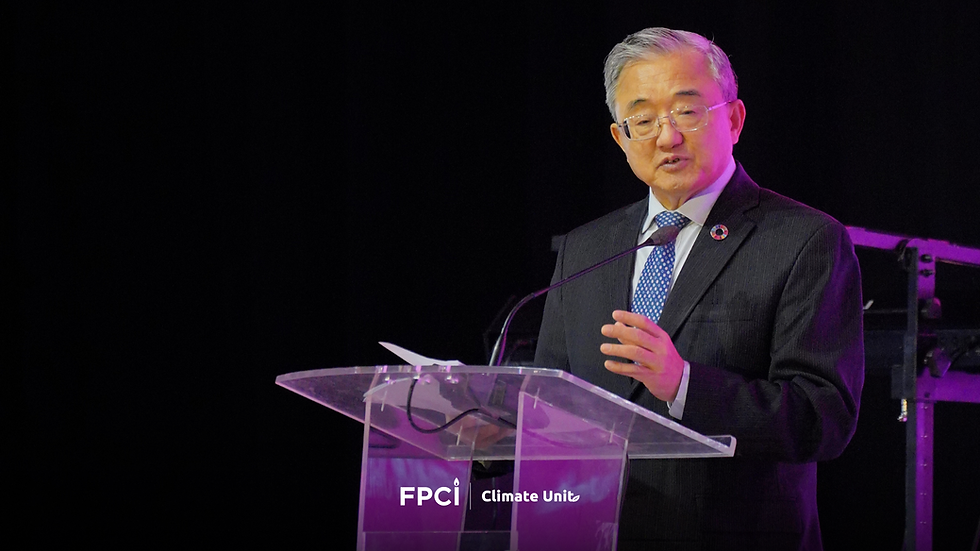
On 23 June, FPCI attended the State of Climate Politics Forum, a flagship event of LCAW hosted by E3G. Dr. Dino Patti Djalal spoke on the first panel, "Connecting the Dots on Geopolitics and Climate Action," alongside:
Surangel S. Whipps Jr., President of Palau
Ana Toni, CEO of COP30 Brazil
Hassan Mohammed Moalin, State Minister at the Ministry of Industry of Ethiopia
Dr. Dino highlighted the growing gap between the urgency of geopolitical developments and the attention given to climate change in global politics. He noted that climate change risks being pushed to the margins of the international agenda as governments respond to intensifying geopolitical competition and economic pressures.
He also pointed to the limited political salience of climate change in many developing countries, where it has rarely become a central electoral issue.
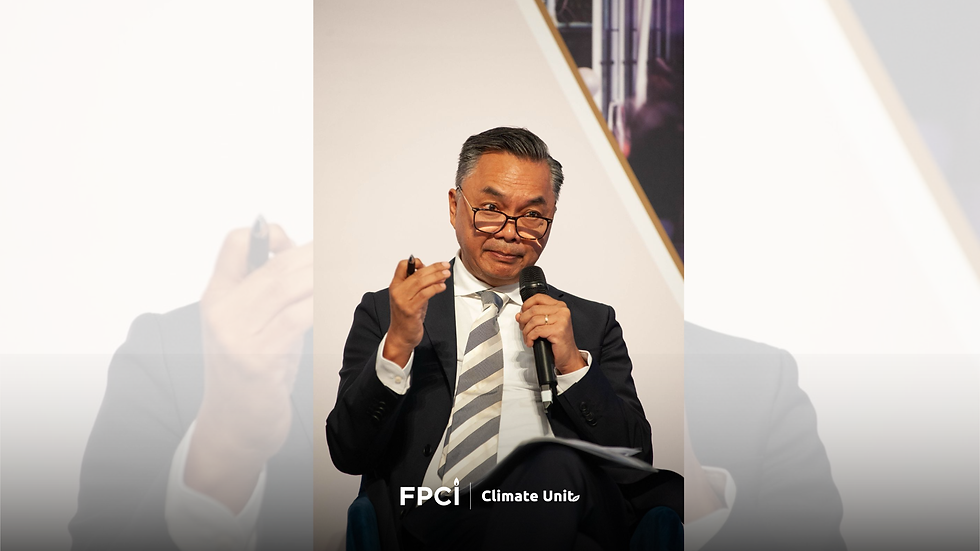
At the same time, Dr. Dino argued that this geopolitical environment creates a growing opportunity for middle powers such as Indonesia to play a more active role in shaping the climate agenda. In a context of declining U.S. engagement in multilateral climate cooperation, Indonesia can pursue partnerships based on its own interests and priorities.
"For countries like Indonesia, strategic autonomy translates into strategic versatility.”
This approach, he argued, gives Indonesia greater flexibility to work with different partners while advancing its national interests.
🔗 The discussion can be rewatched here: https://youtu.be/Cj1lyzISB4E?t=2100
Middle Powers Dialogue on Energy Transition and Green Industrial Transformation
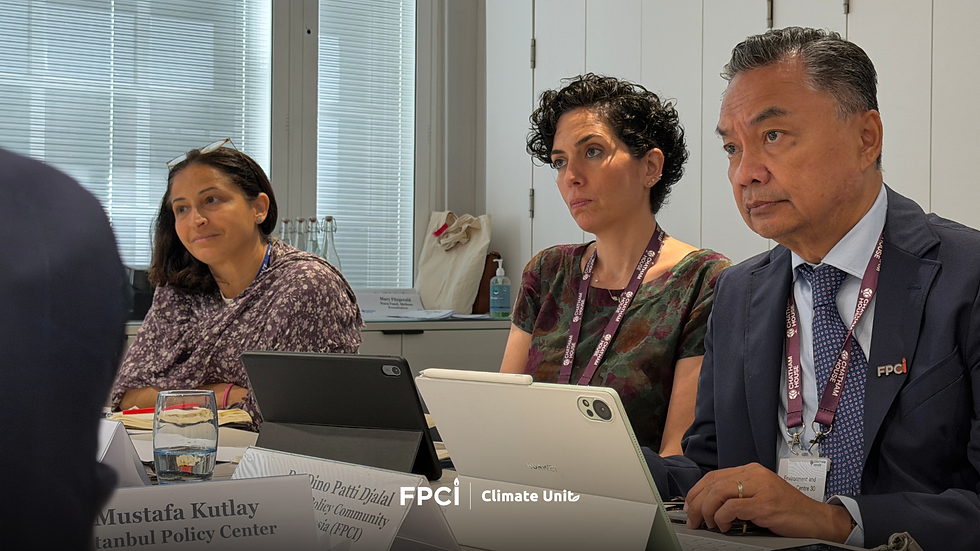
On 24 June, FPCI, in collaboration with the Sustainable Economics and Finance Association (SEFiA) and Chatham House, convened the Middle Powers Dialogue on Energy Transition and Green Industrial Transformation at Chatham House, London.
The dialogue brought together policymakers, think tanks, and civil society representatives from seven middle powers: Indonesia, Türkiye, Brazil, South Africa, Australia, Mexico, and South Korea.

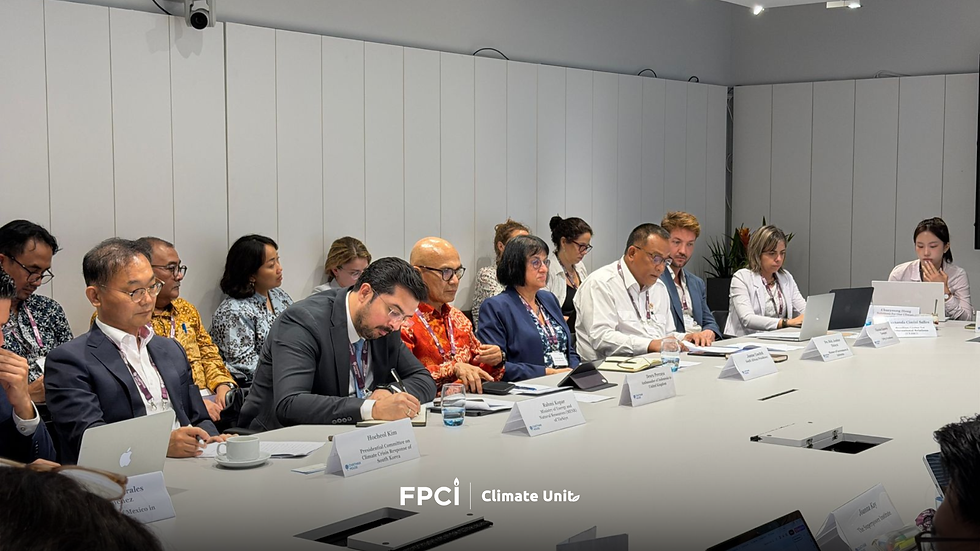
Participating government representatives and senior policymakers included:
Drs. Moh. Jumhur Hidayat, Minister of Environment / Head of the Environmental Control Agency, Republic of Indonesia
Desra Percaya, Ambassador of Indonesia to the United Kingdom
Emily Luck, Assistant Secretary for Climate Engagement Branch, Department of Foreign Affairs and Trade, Australia
Kim Ho Cheol, Director General of the Climate Mitigation Policy Bureau, Presidential Committee on Climate Crisis Response, Korea
Rahmi Kopar, Deputy Director General for Foreign Relations, Ministry of Energy and Natural Resources, Türkiye
Joanne Yawitch, Head of the Just Energy Transition Project Management Unit, South African Presidency
Vinícius Kuczera Zampier, Strategy and Alignment Advisor/Officer for the COP30 Presidency

The discussion examined how middle powers can work together to advance the energy transition and green industrial transformation at a time of growing geopolitical and economic uncertainty. Participants highlighted the need to move beyond broad political commitments towards more practical forms of cooperation. Areas discussed included resilient clean energy supply chains, critical mineral governance, clean technology standards, and transition finance.

A key theme was the need for middle powers to identify areas where cooperation can generate concrete economic and strategic benefits. Rather than treating the energy transition solely as a climate agenda, participants discussed its growing relevance to industrial policy, energy security, trade, competitiveness, and economic resilience.
Climate Security Roundtable: Unsiloing Climate and Security

On 26 June, Dr. Dino Patti Djalal participated in the Climate Security Roundtable on "Unsiloing Climate and Security: Reviewing the Intersections of Geopolitical, Geoeconomic and Climatic Risk." The roundtable, convened by E3G and King's College London.
The roundtable brought together a small, high-level group of government officials, civil society leaders, and private-sector policymakers to discuss needs and approaches related to climate and security in a geopolitically turbulent moment.

Several themes emerged from the discussion:
Climate security needs better framing. Rather than focusing narrowly on traditional concepts of security, climate security should also encompass resilience, preparedness, energy security, economic competitiveness, and public well-being.
Climate risks are increasingly geopolitical—extending beyond physical impacts to include critical minerals, clean tech supply chains, trade, investment, and energy dependence.
Governments remain too siloed, while climate risks are increasingly interconnected. Climate, energy, economic, foreign, and security policies need to be better connected as the risks they address become increasingly interdependent.
The energy transition is also a resilience strategy. The transition is increasingly being understood not only as an effort to reduce emissions, but also as a means of strengthening energy security, economic resilience, and strategic autonomy.
Implementation and finance remain major bottlenecks. Delivering the transition will require greater investment, faster deployment of clean technologies, and more effective approaches to climate finance.
International cooperation needs to become more practical. Beyond high-level commitments, countries need partnerships that deliver tangible cooperation on technology, finance, resilient supply chains, and critical minerals.
Across FPCI’s engagements at discussions with various partners and stakeholders, a common theme emerged: the energy transition is no longer only a climate issue. It is increasingly connected to geopolitics, economic competitiveness, energy security, and strategic autonomy.
For middle powers, this creates both a challenge and an opportunity. As geopolitical competition intensifies and traditional forms of multilateral cooperation face greater pressure, countries such as Indonesia have greater leverage to take part in shaping the global climate agenda, along with other middle powers.

FPCI's participation in LCAW 2026 provided an opportunity to bring these perspectives into discussions, elevating the voices of middle powers, and reinforcing the need to translate these discussions into inclusive, practical cooperation and a resilient approach to climate action.
As the world faces growing geopolitical uncertainty, the message from London was clear: climate action cannot be sidelined. Middle powers must lead, collaborate, and innovate to build a sustainable and secure future for all.


Comments