
FPCI & ICCSD Tsinghua University Convene the 2nd Indonesia–China Track 1.5 Dialogue on Advancing Clean Energy Cooperation

The Track 1.5 Indonesia–China Dialogue on Advancing Strategic Clean Energy Cooperation in a Changing Global Order was successfully held on Friday, 31 August 2026, at The Ritz-Carlton Mega Kuningan, Jakarta. The dialogue is co-organized by Foreign Policy Community of Indonesia (FPCI) and Institute of Climate Change and Sustainable Development at Tsinghua University (ICCSD), brought together government, industry, academia, and civil society to explore how Indonesia–China cooperation can evolve in response to a rapidly changing global energy and geopolitical landscape.

The dialogue were structured around three themes:
Energy Security & Transition: Exploring the geopolitical shifts reshaping Indonesia–China energy cooperation and the case for deeper strategic alignment.
Solar & Battery: Exploring how Indonesia and China can align capabilities, investment, and industrial linkages to accelerate clean energy deployment.
Zero-Carbon Industrial Parks: Drawing on experience from both countries to explore practical models for developing viable, low-carbon industrial ecosystems.
Featuring a diverse group of Indonesian and Chinese stakeholders, including MPR, PLN, MEMR, Ministry of Industry, Coordinating Ministry for Economic Affairs, KADIN, MIND ID, as well as Chinese government, industry, and research institutions.


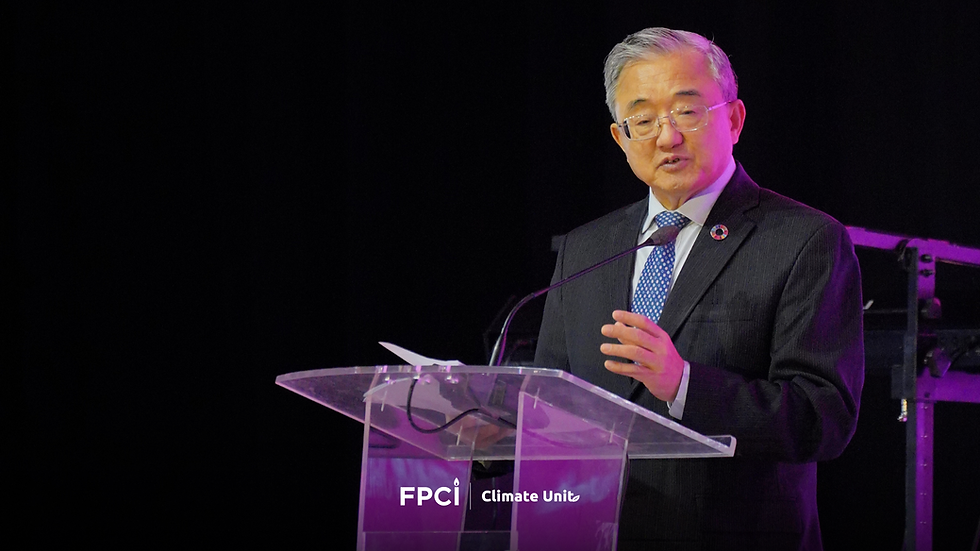
We were honored to welcome H.E Jumhur Hidayat, Minister of Environment of the Republic of Indonesia and H.E. Liu Zhenmin, Special Envoy for Climate Change of the People’s Republic of China to deliver a keynote address, bringing strategic perspectives from both sides.
Across these discussions, participants emphasised the need to translate Indonesia–China existing cooperation into concrete partnerships and actionable pathways, moving beyond dialogue towards joint initiatives that can accelerate Indonesia’s clean energy ambitions while creating shared economic and strategic benefits for both countries.
Energy security and transition are becoming inseparable

At its core, the dialogue was convened at a critical point marked by geopolitical fragmentation, supply chain disruptions, and growing energy security pressures. The dialogue examined how existing Indonesia–China cooperation can evolve beyond conventional collaboration into a more strategic pathway for navigating the changing dynamics of the global energy transition and strengthening economic resilience.
Several times the dialogue mentioned that “...the energy transition is not simply a climate agenda; it has become central to national security, industrial resilience, economic competitiveness and social being for both countries.”

As energy security, industrial competitiveness and decarbonisation increasingly converge, bilateral cooperation needs to evolve beyond transactional projects toward integrated systems, shared industrial capabilities and resilient supply chains.
Indonesia's growing industrial and electricity demand means the transition must simultaneously deliver reliability, affordability and decarbonisation. At the same time, China brings extensive capabilities across clean-energy manufacturing, technology development, infrastructure deployment and large-scale implementation. The opportunity lies in connecting these complementary strengths to build a more secure and resilient energy system while strengthening the industrial foundations of the transition.

The changing geopolitical environment makes this even more important. Disruptions to global energy markets and supply chains have demonstrated that energy security can no longer be considered separately from the resilience of clean energy supply chains, access to critical minerals, technological capabilities and domestic manufacturing. For both countries, the transition is about building the infrastructure, industries and supply chains needed to sustain economic growth amid a more uncertain global environment.
Beyond project-based cooperation

Indonesia–China clean energy cooperation has already produced tangible projects and investments. However, the dialogue highlighted that the next phase should move beyond individual assets, transactions, and MoUs toward integrated energy–industrial ecosystems.
The emerging model links renewable generation with storage, transmission, industrial demand, manufacturing, critical mineral value chains, and low-carbon industrial parks. This system-based approach can strengthen Indonesia's energy security while creating resilient demand for China's clean energy capabilities and supporting the development of competitive industries in both countries. Participants called for cooperation to evolve from equipment trade and project delivery toward ecosystem-building, technological creation, and long-term industrial collaboration.
Indonesia's 100 GW solar ambition can become the anchor for implementation

The 100 GW solar ambition emerged as the most concrete entry point for translating strategic alignment into action. The ambition demonstrates an opportunity to strengthen energy security, reduce exposure to fossil fuel volatility, create new industrial capacity, and accelerate Indonesia's broader economic transformation.
The scale of the ambition, however, means that deployment cannot be approached through generation projects alone. Solar must be accompanied by storage, transmission, smart grids, financing, manufacturing, land, and a predictable project pipeline. PLN explicitly framed the objective as an integrated ecosystem combining renewable generation, battery storage, transmission infrastructure, advanced manufacturing, and long-term investment.

The dialogue therefore moved the question from whether Indonesia and China should cooperate on solar to how that cooperation can help close the gap between ambition and execution.
Putting Zero Carbon Industrial Park Development into Practice

The final part of the dialogue explored how industrial parks can serve as engines of economic growth while also creating risks of long term carbon lock-in. As Indonesia expands its downstream industries, embedding clean energy and low-carbon infrastructure from the outset will be critical. The discussion highlighted the potential for Indonesia–China cooperation to support this transition, while emphasising that China’s experience should not simply be replicated. Instead, both countries can work towards approaches suited to Indonesia’s unique resource endowments, industrial structure, and market conditions.
The next steps is to turn dialogue to practical cooperation

A key takeaway was that cooperation should be supported by governments but led by businesses, with commercially viable models at the center. Projects need to be structured in ways that allow companies to generate sustainable returns, as cooperation that is not commercially viable will ultimately be difficult to sustain.
It also underscored that successful cooperation will require greater mutual understanding and trust, alongside continued engagement between government, business, and other stakeholders. As a next step, FPCI and ICCSD will continue exploring practical areas of cooperation and concrete action items to move forward, with both sides also committing to continue the Track 1.5 dialogue in China next year.

Visit to Cirata Floating Solar PV Plant

On Thursday, 30 July 2026, we also brought the Chinese delegation to the Cirata Floating Solar Photovoltaic (FPV) Plant in Purwakarta, West Java—Southeast Asia’s largest floating solar facility and the third-largest in the world. The visit provided an opportunity to see first-hand one of Indonesia’s flagship large-scale solar projects and a concrete example of clean energy deployment in practice.


The delegation also held a discussion with Respati Adi Katmoyo, Outreach and Stakeholder Manager at PT Pembangkitan Jawa Bali Masdar Solar Energi (PMSE), on the development of the facility and its contributions to Indonesia’s energy transition and sustainable development.
As Indonesia and China look to deepen their clean energy cooperation, the challenge ahead is to translate shared ambitions into concrete projects, investments, and partnerships that can deliver a faster, more resilient, and mutually beneficial energy transition.


Comments