
FPCI-E3G Collaboration at MSC 2026: When Climate Threats Become a National Security Issue in the Indo-Pacific
Updated: Feb 27

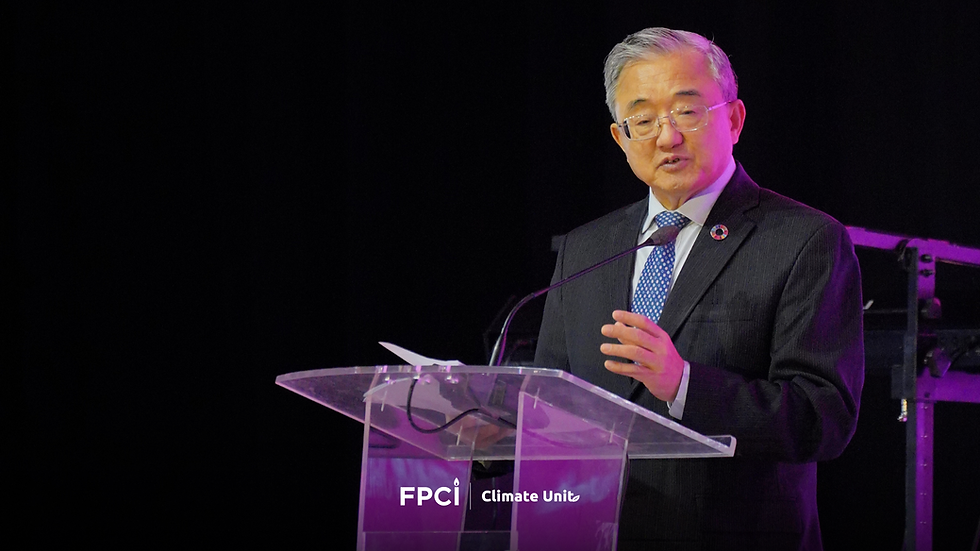
On the sidelines of the Munich Security Conference (MSC) 2026, the Foreign Policy Community of Indonesia (FPCI) together with E3G, two international think tanks, successfully held the MSC Climate Security Breakfast entitled "Rising Tides: Climate and Security in the Indo-Pacific." The event, which took place at the Bibliothek/Library, Hotel Bayerischer Hof, Munich, Germany, brought together approximately 15 senior representatives and leading thinkers from G20 countries and Pacific Island states.
The discussion examined how climate security is understood and framed by various actors—particularly within the G7, G20, and BRICS+—and how the concept can be articulated in ways acceptable to both developed and developing countries. The discussion explored what is needed to balance climate priorities, climate security, and traditional security, including in terms of resource allocation, while highlighting existing models and best practices, as well as their implications for regional partnerships.
Participants included parlementarians, senior policymakers working on climate foreign policy and national security, as well as leading policy experts.
During the discussion, participants used the UN definition of Climate Security – although definitions differ across governments and regions – namely "the impacts of the climate crisis on peace and security, particularly in fragile and conflict-affected settings."
Using this broad definition, E3G and FPCI found 70 countries and International Organizations (AU, EU, PIF, NATO) that have either released climate security strategies or incorporated such language into their NDCs (Nationally Determined Contributions), climate frameworks, or national security frameworks. Many have integrated climate security language into multiple documents; we found 55 such cases.
For your information, recently the UK released a report finding that climate impacts threaten "UK [and global] national security and prosperity," and the 18-member Pacific Island Forum called climate change the "single greatest threat to Pacific security."
Participants engaged in in-depth discussions on how various countries are operationalizing climate security frameworks, best practices that have been successfully implemented, and lessons that can be adopted and scaled across regions.
As background, this discussion is a continuation of last year's high-level dialogue focusing on climate security frameworks organized by E3G on the sidelines of the Munich Security Conference (MSC) 2025. Against the backdrop of escalating climate impacts and intensifying geopolitical competition in the Indo-Pacific region, climate risks are now concretely shaping national security policy, foreign policy, and regional stability.


Comments