
Middle Powers Form New Axis for Energy Transition, Responding to Global Leadership Vacuum
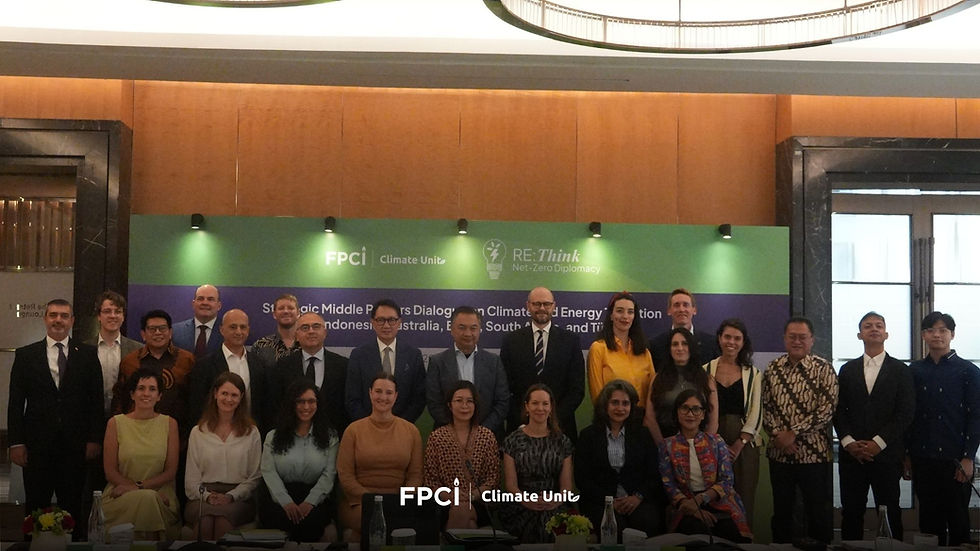
Amid geopolitical uncertainty and stalled global climate financing, five middle powers nations—Indonesia, Brazil, Türkiye, South Africa, and Australia—are uniting their vision to make the energy transition an engine for inclusive growth and a strengthener of regional sovereignty through collective diplomacy.
Responding to the leadership vacuum and fragmentation in global climate action, five middle power countries united in a forum titled Strategic Middle Powers Dialogue on Climate and Energy Transition in Jakarta on July 25, 2025. This Track 1.5 diplomacy platform, organized by the Foreign Policy Community of Indonesia (FPCI), brought together government representatives and experts from Indonesia, Brazil, Türkiye, South Africa, and Australia to design concrete strategies for a just, sovereign energy transition that drives economic growth.
The dialogue was specifically designed to build trust and strategic alignment among middle powers nations, positioning the energy transition not merely as a climate obligation, but as a strategic lever for growth, innovation, and geopolitical relevance in their respective regions.
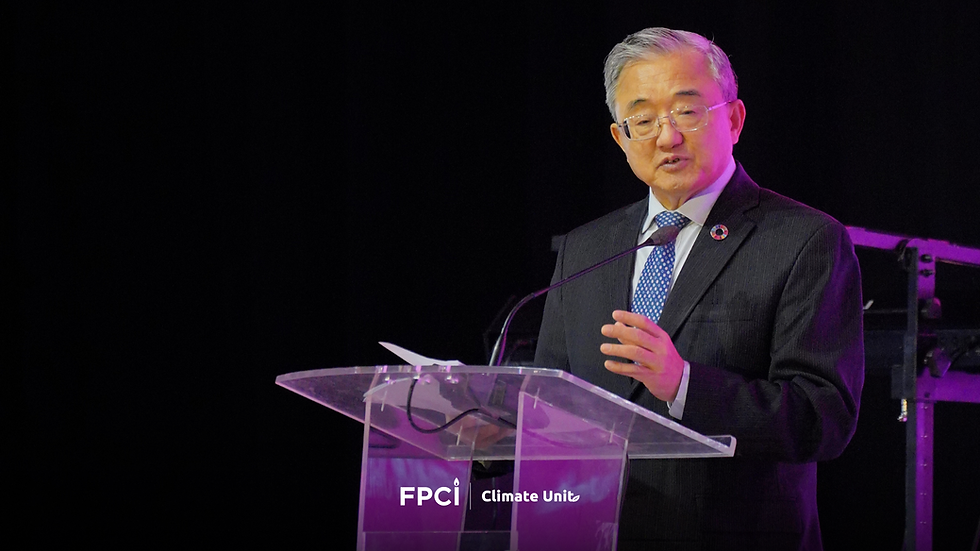
“In the emerging new world order, the role of middle powers will become greater, whether we like it or not,” emphasized Dino Patti Djalal, Founder and Chairman of FPCI, in his opening remarks. “Indonesia's capacity, weight, and ambition as a middle power have made us a distinct player. Collectively, we can reignite climate diplomacy.”
This statement was echoed by Indonesian Vice Minister of Foreign Affairs, Arif Havas Oegroseno, who highlighted real challenges on the ground. “Climate is the key, but we still have a long way to go. Financing from developed countries remains minimal, as they are distracted by war, geopolitical uncertainty, and their own domestic priorities. This is a collective challenge we face,” he said.
The dialogue focused on three main pillars:
Climate Diplomacy to strengthen collective influence;
Innovative Finance Mobilization to overcome investment gaps; and
Scaling Up Renewable Energy for energy security and green growth.
Participants stressed that “a just transition must go beyond merely replacing energy sources, towards broader economic and social transformation.” Without this, the world risks shifting from high-carbon poverty to low-carbon poverty.
As a follow-up, participants committed to:
Strengthening their collective voice by bringing the dialogue's outcomes to BRICS, MIKTA, and G20 forums.
Sustaining momentum through continued dialogue and involving governments earlier in agenda planning.
Remaining consistent in their approach to pragmatic multilateralism to keep global climate ambition alive.
This meeting affirmed that amidst global uncertainty, middle power nations possess the unique capacity and responsibility to act as bridge-builders and real drivers of an inclusive energy transition. The future of climate governance is no longer to be waited for, but to be designed together through equal cooperation that connects climate ambition with the real welfare of societies.


Comments