
Rethinking Energy Security in Southeast Asia: Beyond Fossil Fuels, Toward Regional Resilience
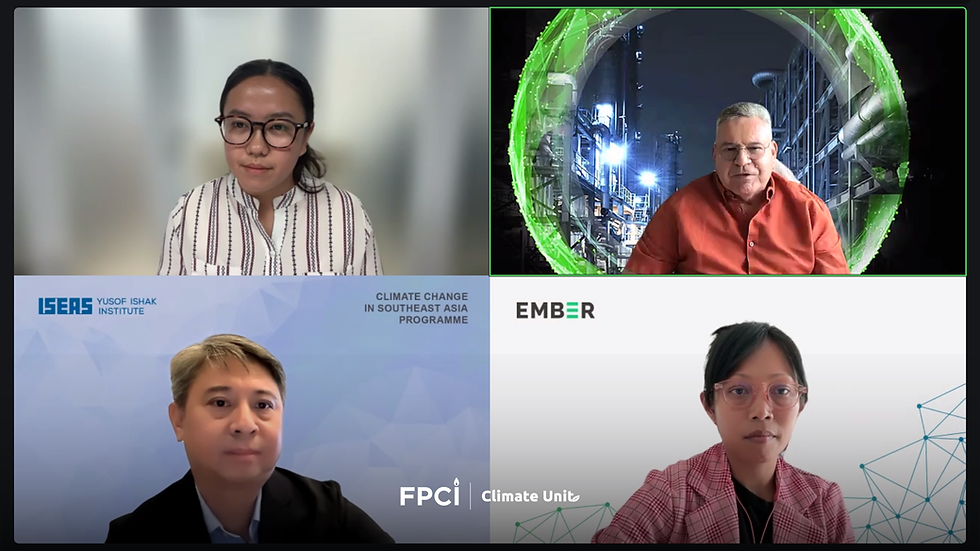
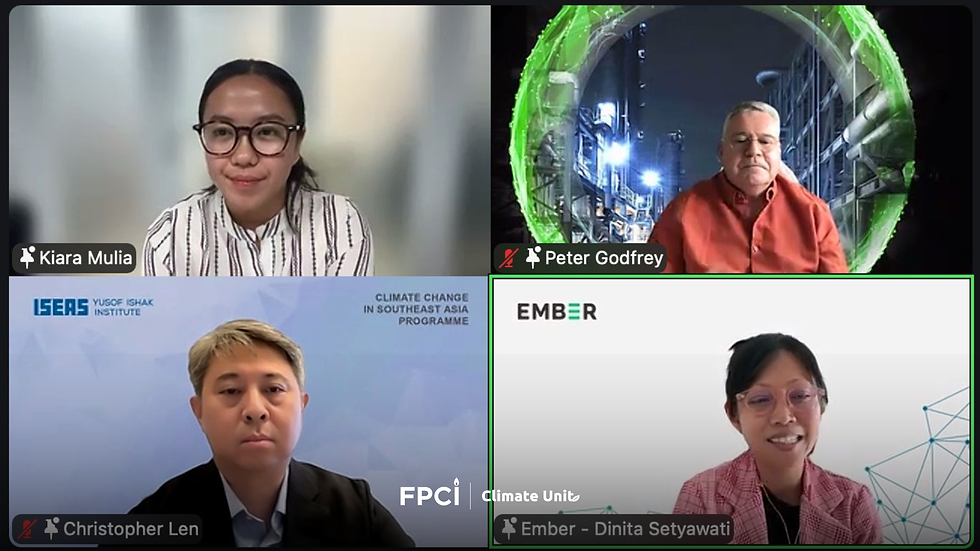
Southeast Asia's long-standing dependence on fossil fuels is no longer sufficient to guarantee energy security amid intensifying geopolitical tensions, increasingly fragile supply chains, and a more interconnected regional energy system. In a webinar titled "Rethinking Energy Security in a Fossil-dependent Southeast Asia" organized by the Foreign Policy Community of Indonesia (FPCI) and ISEAS - Yusof Ishak Institute on Thursday (16/7), experts agreed that the region must redefine its concept of energy security to break free from fossil fuel dependency.
The Evolution of Energy Security
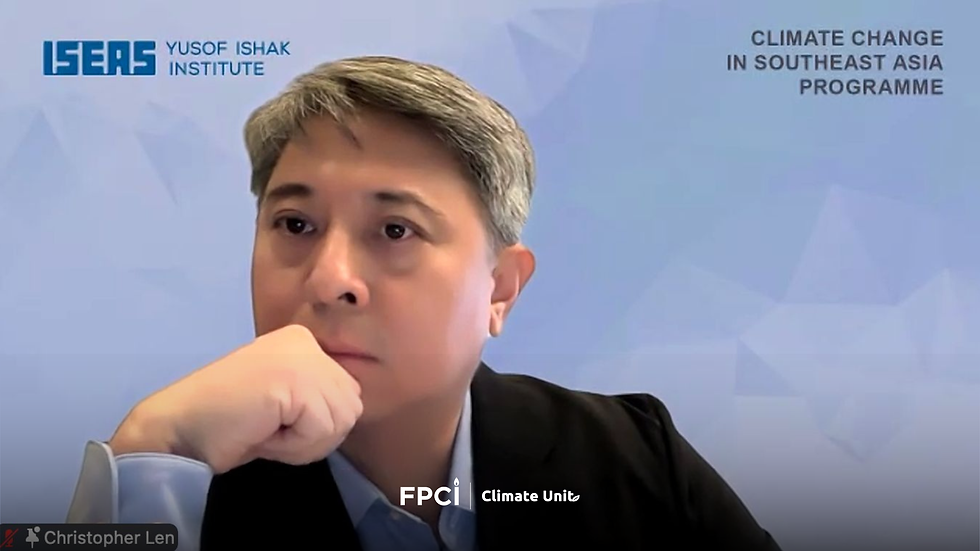
Christopher Len, Senior Fellow and Acting Coordinator of the Climate Change in Southeast Asia Programme at ISEAS - Yusof Ishak Institute and Policy Director at the Future Energy Storage & System Integration Alliance (FESSIA), explained that the concept of energy security has evolved through three distinct stages. The first stage focuses on who controls the fuels, encompassing physical availability, prices, and strategic chokepoints such as the Strait of Hormuz and the Strait of Malacca. The second stage concerns system architecture—how power grids can integrate variable renewable energy and interconnect across borders. The third stage is industrial strategy, which involves building a clean energy economy that creates high-value jobs.
"Energy security is not about supply, it's also about demand and how people and businesses use energy directly will affect how secure and resilient the system is," Len emphasized.
Len also noted that "The power generation model itself has changed, and security now lives in the architecture of the system, not just the fuel supply."
"Critically, geopolitics does not disappear in this transition. It relocates," he added, explaining that "the current transition moves our geopolitical exposure, but does not eliminate it."
He further explained that "affordability and sovereignty point the same way" and that "community acceptance is very important for policy success. All of this will fail without public support."
Four Key Priorities for Alignment
Len identified several key priorities that Southeast Asian countries need to address, including physical alignment—connecting renewable energy resources to areas with high electricity demand—and geopolitical alignment, which involves managing major power competition and reducing exposure to strategic chokepoints. He also emphasized supply chain alignment to secure access to critical minerals, equipment, and technology amid resource nationalism and trade tensions, as well as Paris goal alignment to ensure that today's actions align with decarbonization commitments.
Overcoming Systemic Barriers
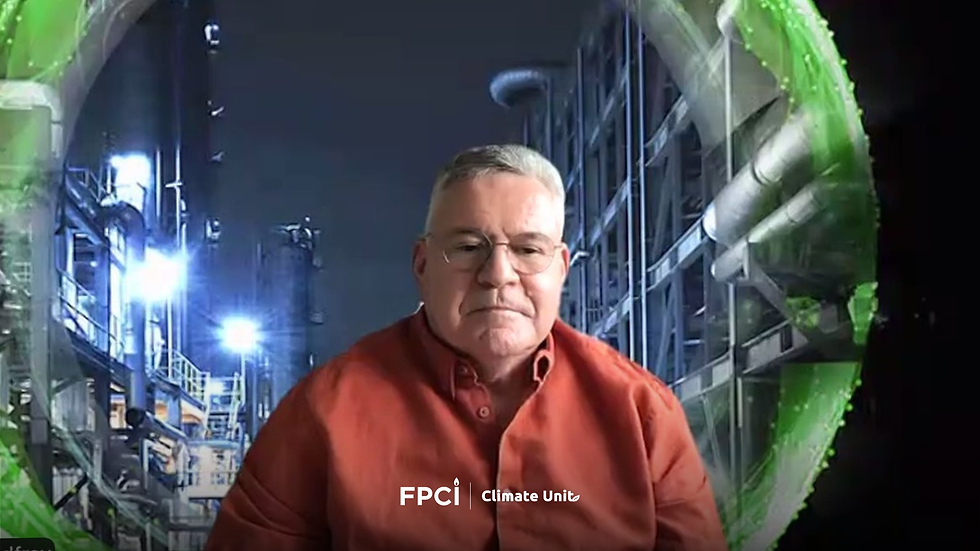
Dr. Peter Godfrey, Founder and CEO of CarbonSync Technologies, highlighted that energy does not exist in isolation. It sits at the heart of interconnected industrial systems. Natural gas, for example, is not only used for electricity but also serves as feedstock for ammonia, fertilizers, and countless industrial chemicals. Crude oil is transformed into plastics, pharmaceuticals, and thousands of products that underpin modern life.
"The real question is: how do we redesign our industrial economies so they remain prosperous, competitive and resilient while progressively decarbonizing?" Godfrey asked.
He further stated: "The future of Southeast Asia will not be determined simply by how fast we deploy renewable energy or how quickly we reduce emissions. It will be determined by how successfully we redesign our industrial ecosystems to become more resilient, more diversified, and more strategically controllable."
Godfrey also emphasized that "In the coming decades, the winners will not simply be those who produce the cleanest energy. They will be those who build the most resilient and competitive industrial economies."
"We recognize that national security and energy security are one and part of exactly the same issue," he asserted, adding that until we recognize that national security and energy security are one and part of exactly the same issue, we are not going to find solutions to this problem. “Energy is a national security issue.”
"When we talk about reducing our dependence on hydrocarbons, we're not simply changing our economy. We're transforming it, and we need to transform it into something very different," Godfrey explained.
He noted that "The future is therefore not choosing between renewables, hydrogen, carbon capture, batteries or artificial intelligence. All of these technologies matter, but none is a solution on its own. The real opportunity lies in creating integrated low-carbon industrial ecosystems where clean energy, low-carbon fuels, carbon management, circular economy solutions, digital technologies and sustainable finance all work together at scale."
On pricing and regulation, Godfrey observed: "Price is basically an artificial number that is created by supply and demand. We have prices, and we have artificial regulations put in place. The national regulations will change, but do not change the whole world through regulations. It'll never work. Let's create something completely new. Let's create a new way of looking at the problem and regulate for that."
He emphasized the importance of creating localized, decentralized industrial hubs rather than relying solely on massive centralized power grids, which allows for the circular use of energy, resources, and materials, making them more efficient and attractive to investors.
Regional Cooperation and Just Transition
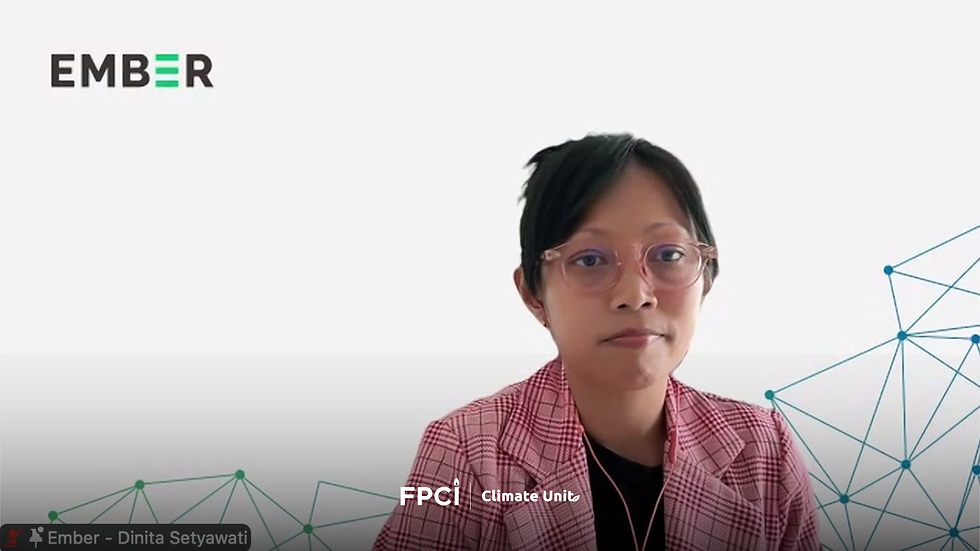
Dinita Setyawati, Senior Energy Analyst for Asia at Ember Energy, emphasized that Southeast Asia's energy security can no longer be addressed through isolated national efforts. Instead, she called for an important regional cooperation and a more integrated approach that embeds energy considerations across sectors and policies.
"People should realize that energy is not just about technical matters, but about our livelihood, our future, our next generation, and determining our survival on Earth for the next hundreds of years," Dinita said.
To strengthen regional energy security, Dinita stressed the critical importance of the ASEAN Power Grid in connecting diverse renewable energy resources across Southeast Asia and ensuring that growing electricity demand—including from electric vehicles (EVs)—is met with clean energy. She also highlighted the need to integrate energy planning with disaster resilience frameworks, such as ASEAN's Agreement on Disaster Management and Emergency Response (AADMER), to unlock additional financing for distributed renewable energy systems that are more resilient than centralized fossil fuel infrastructure during emergencies.
Despite the region's significant renewable energy potential—including the capacity to deploy up to 200 GW of solar power—Dinita argued that the primary barriers are institutional rather than technological. Policies such as Domestic Market Obligation (DMO) schemes in Indonesia continue to keep fossil fuels artificially competitive, slowing the deployment of renewable energy.
"Renewable energy becomes a new energy currency, and those who own and deploy renewable energy technologies will have a more secure energy future," she stated.
Beyond technology and infrastructure, Dinita underscored that the transition must also be equitable. Addressing coal-dependent regions such as Kalimantan and South Sumatra, she acknowledged the challenges of replacing coal-related revenues and livelihoods, calling for a just transition that prioritizes upskilling and reskilling local workers to ensure that communities are not left behind.
"What does energy security mean for you, and how do you embed everything into just transition considerations while making sure that no one is left behind in this transition to a new renewable-based power system?" she asked.
She concluded by posing a broader question for policymakers across the region: "What does energy security mean for you, and how do you embed everything into just transition considerations while making sure that no one is left behind in this transition to a new renewable-based power system?" While challenges remain, Southeast Asia is already showing encouraging signs of progress.
Singapore and Vietnam recorded electric vehicle (EV) shares of approximately 40% of new car sales in 2025, while Indonesia saw EV adoption increase by 125%, demonstrating the region's growing momentum toward cleaner transportation.
The Way Forward
At the end, Len emphasized the need for a regional financing facility, harmonized regulations, and finalized frameworks for subsea cables and energy certificates. He also called for integrated planning for both generation and transmission, with batteries treated as a regional asset class.
"Common shared notion of security between Southeast Asian member states, where the region collectively manages supply shocks so that individual countries are not left to face vulnerabilities in isolation," Len concluded.
Although they approached the issue from different perspectives, all three speakers shared a common message: Southeast Asia's energy security can no longer be measured solely by access to fossil fuels. Instead, it will increasingly depend on resilient infrastructure, diversified industrial ecosystems, stronger regional cooperation, and a just transition that leaves no community behind.


Comments